How Ceramic & Tile Brands in Morbi Can Use Branding to Win Export Markets

  • Home
  • Architecture
  • How Ceramic & Tile Brands in Morbi Can Use Branding to Win Export Markets

How Ceramic & Tile Brands in Morbi Can Use Branding to Win Export Markets

Morbi makes the tiles.
The world buys them.
But do they remember who made them?

That’s the real problem.

Morbi is responsible for over 70% of India’s ceramic tile production — and a significant share of global exports.
Yet most tile companies from Morbi look identical to buyers in Europe, the Middle East, and the US.

Same catalogues. Same price negotiations. Same margins.

The businesses breaking out of this cycle aren’t doing it with better production.
They’re doing it with branding for ceramic companies in Morbi

Why Morbi's Tile Industry Has a Branding Problem

Morbi is a manufacturing powerhouse.
But manufacturing excellence alone doesn’t create brand loyalty.

Most ceramic companies in Morbi operate with:

– Generic company names that don’t communicate quality
– Catalogues that look like every competitor’s
– No consistent visual identity across packaging, sales material, and website
– No clear brand positioning for international buyers

The result?

Buyers choose based on price.
Not brand.
Not trust.
Not quality perception.

And when decisions are made on price alone, margins shrink — every time.
Strong brand identity for tile companies changes that equation.

What Export Buyers Actually Look For

When a buyer from Dubai, Germany, or Australia shortlists ceramic suppliers, they compare more than samples.

They evaluate:

– Does this brand look credible?
– Does the packaging match the product quality?
– Is there a clear story or positioning?
– Would my customers trust this brand on the shelf?

This is why branding for ceramic companies in Morbi is not just a cosmetic investment — it’s a business development strategy.

A brand that looks premium gets taken more seriously.
A brand that looks generic gets negotiated down.

The gap between the two is not production — it’s perception.

Where Ceramic Brands Lose the Deal

Most tile companies in Morbi lose export opportunities at three specific touchpoints:

1. First Contact — Digital Presence

When a buyer Googles your brand after a trade fair, what do they see?
A slow website with unclear messaging and stock photos doesn’t inspire confidence.

Your website is your showroom for international buyers.
It should communicate quality, scale, and trust — within 10 seconds.

2. Catalogue & Packaging Design

A poorly designed product catalogue communicates one thing:
“We haven’t invested in how we look.”

And if you haven’t invested in how you look, buyers assume you haven’t invested in quality either.

Packaging design for ceramic brands in India is one of the most underutilised growth levers — especially for companies targeting premium markets.

3. Trade Fair Presence

At exhibitions like Coverings or Cersaie], Indian tile companies compete directly with Italian, Spanish, and Turkish brands that have spent decades building visual identity.

The companies that stand out don’t just have better tiles.
They have a better brand system.

What Strategic Branding Actually Does for Tile Companies

Branding for ceramic companies in Morbi is not just about a logo.

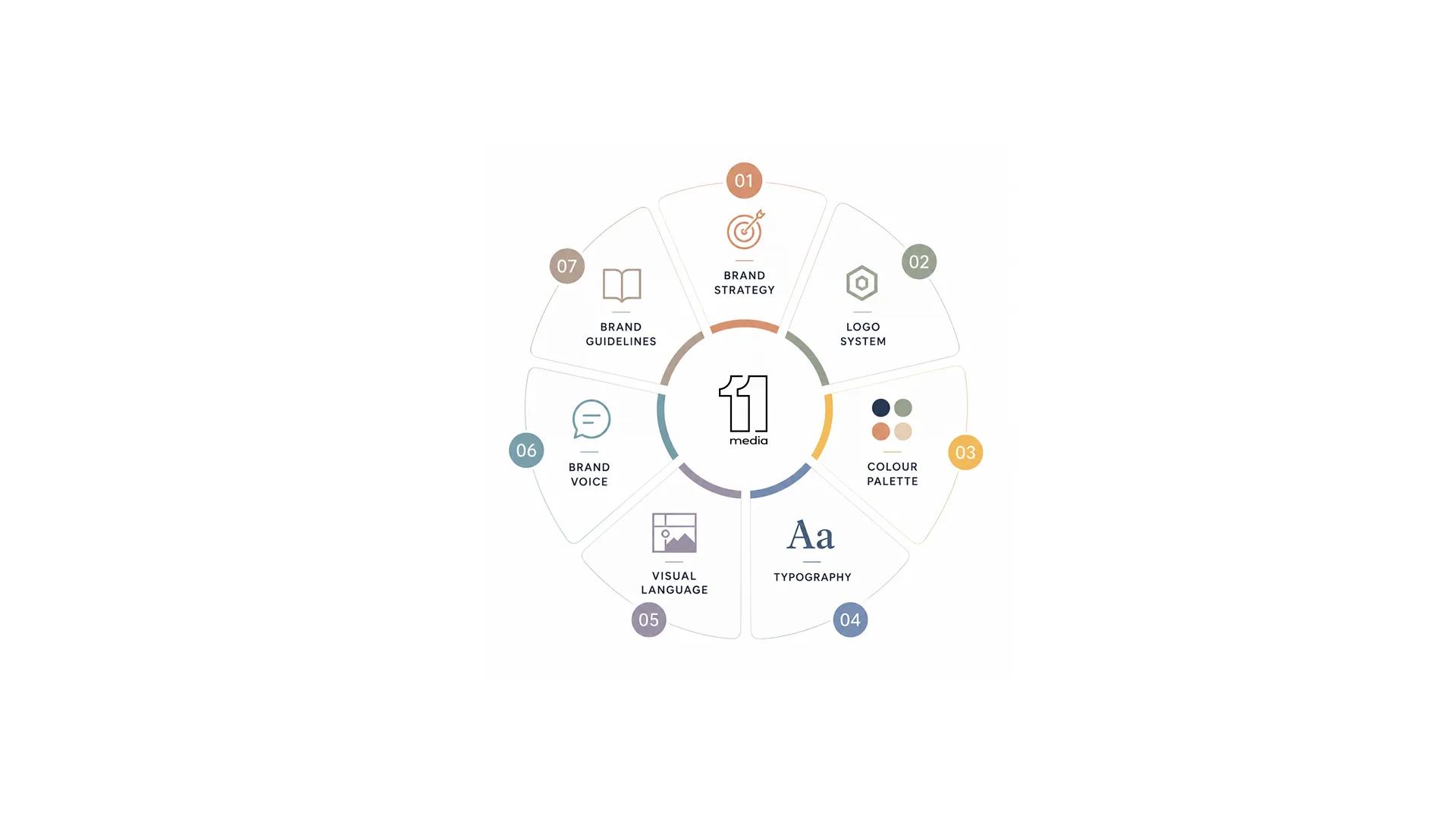
A complete brand system includes:

– Brand name strategy and positioning
– Logo design and visual identity
– Typography, colour palette, and brand guidelines
– Packaging design that reflects product quality
– Catalogue and sales collateral
– Website that communicates to international buyers
– Social media identity for B2B and B2C channels

When all of these work together, your tile brand doesn’t just look better.
It commands better pricing, attracts better buyers, and builds long-term recall.

Brand consistency drives trust.
And trust is what converts a buyer at a trade fair into a long-term distribution partner.

The Morbi Market Is Evolving — Is Your Brand?

The ceramic industry in India is going through a shift.

Buyers are moving towards brands — not just suppliers.
E-commerce and digital catalogues mean global buyers can now compare ten suppliers in ten minutes.

Companies like Kajaria, Somany, and Asian Granito didn’t become national leaders because of better clay.
They built brands that people recognise, trust, and pay a premium for.

The same opportunity exists for mid-size and emerging ceramic companies in Morbi.

But the window to differentiate is not permanent.
As competition increases, the cost of looking generic only gets higher.

How ELVN Media Approaches Branding for the Ceramic Industry

At ELVN Media, we don’t start with design.
We start with understanding.

We’ve worked directly with manufacturers in Morbi — walked factory floors, understood the production process, and seen firsthand what differentiates a world-class tile product from the competition.

Our approach to branding for ceramic companies in Morbi combines:

– Industry research and competitor mapping
– Brand positioning that speaks to export buyers
– Visual identity systems built for both print and digital
– Packaging and catalogue design aligned with premium markets
– Website and digital marketing strategy that supports international reach

Because branding in the ceramic industry isn’t one-size-fits-all.
It has to speak to buyers in Dubai, distributors in Germany, and end customers in the US — simultaneously.

We build brand systems that do exactly that.

The tile market won’t wait.
Buyers are already forming preferences.

The question is — when they think of premium ceramic from India, will they think of your brand?

If not, let’s change that.

Let’s rethink how your ceramic brand grows.

Leave A Comment

Cart (0 items)