Every business has a product or service. But not every business has a brand.
The difference between a business that people remember and one they forget almost always comes down to brand identity — the complete system that defines how a business looks, sounds, feels, and is perceived by the world.
Yet for most business owners in India, brand identity remains one of the most misunderstood concepts in business. Many confuse it with a logo. Others confuse it with marketing. Some think it only matters for large companies with big budgets.
None of that is true.
Brand identity matters for every business — from a startup in Rajkot to a manufacturer in Morbi to a D2C brand scaling across India. And understanding what it is, what it includes, and how to build it is one of the most valuable things you can do for your business.
This guide covers everything.
Brand identity is the collection of visual, verbal, and emotional elements that a business uses to express itself consistently to its audience.
In simple terms — brand identity is how your business presents itself to the world, and how people experience and remember you as a result.
It is not just your logo. It is not just your colours. It is the complete system that makes your business instantly recognisable, consistently trustworthy, and emotionally memorable — across every single touchpoint, from your website to your packaging to your social media to the way your team communicates.
Think of brand identity like a person’s personality. When you meet someone, you don’t just notice their appearance — you notice how they talk, how they carry themselves, what they value, and how they make you feel. Brand identity works the same way for a business.
| Que | Brand Identity | Brand Image |
|---|---|---|
| What it is | How your business presents itself | How your audience perceives you |
| Who controls it | You — the business | Your customers |
| What it includes | Logo, colours, typography, messaging, voice | Reputation, associations, feelings |
| When it’s built | Intentionally, through strategy and design | Organically, through every experience |
| Goal | To communicate your intended positioning | To reflect your actual positioning |
The gap between brand identity and brand image is where branding problems live. A strong brand identity — built with strategy and consistency — closes that gap by ensuring what you intend to communicate is what your audience actually receives.
This is the most common misconception in Indian business, particularly among startups and small businesses.
A logo is one element of brand identity. Brand identity is the complete system.
Here is an analogy that makes it clear — a logo is like a person’s face. Brand identity is the whole person — their face, their voice, their personality, their values, their style, and the way they make others feel.
A business can have a beautiful logo and still have a weak brand identity — because the logo has no system around it. No consistent colours. No defined typography. No clear voice. No guidelines for how everything works together.
That is why businesses that invest only in a logo often struggle with inconsistency — every new designer, every new campaign, every new piece of content looks slightly different — because there is no identity system to keep it all aligned.
A complete brand identity is built from seven core elements. Each one plays a specific role in how your brand is perceived.
Before any visual element is created, a strong brand identity starts with strategy. This includes your brand positioning, your target audience definition, your brand purpose, your values, and your key messages.
Strategy is the foundation. Everything else is built on it. Without strategy, visual design is guesswork.
2. Logo System
A professional brand identity doesn’t use a single logo — it uses a logo system. This includes:
– Primary logo — the full version used in most applications
– Secondary logo — a simplified or rearranged version for smaller spaces
– Icon or mark — a standalone symbol used as a favicon, app icon, or profile picture
– Usage rules — guidelines for spacing, sizing, and what not to do with the logo
3. Colour Palette
Colour is one of the most powerful tools in brand identity. Research shows that colour alone increases brand recognition by up to 80%.
A defined colour palette includes:
– Primary colours — the dominant brand colours
– Secondary colours — supporting tones for variety
– Neutral colours — backgrounds, text, and supporting elements
– Exact codes — HEX for digital, CMYK for print, Pantone for specialist applications
4. Typography
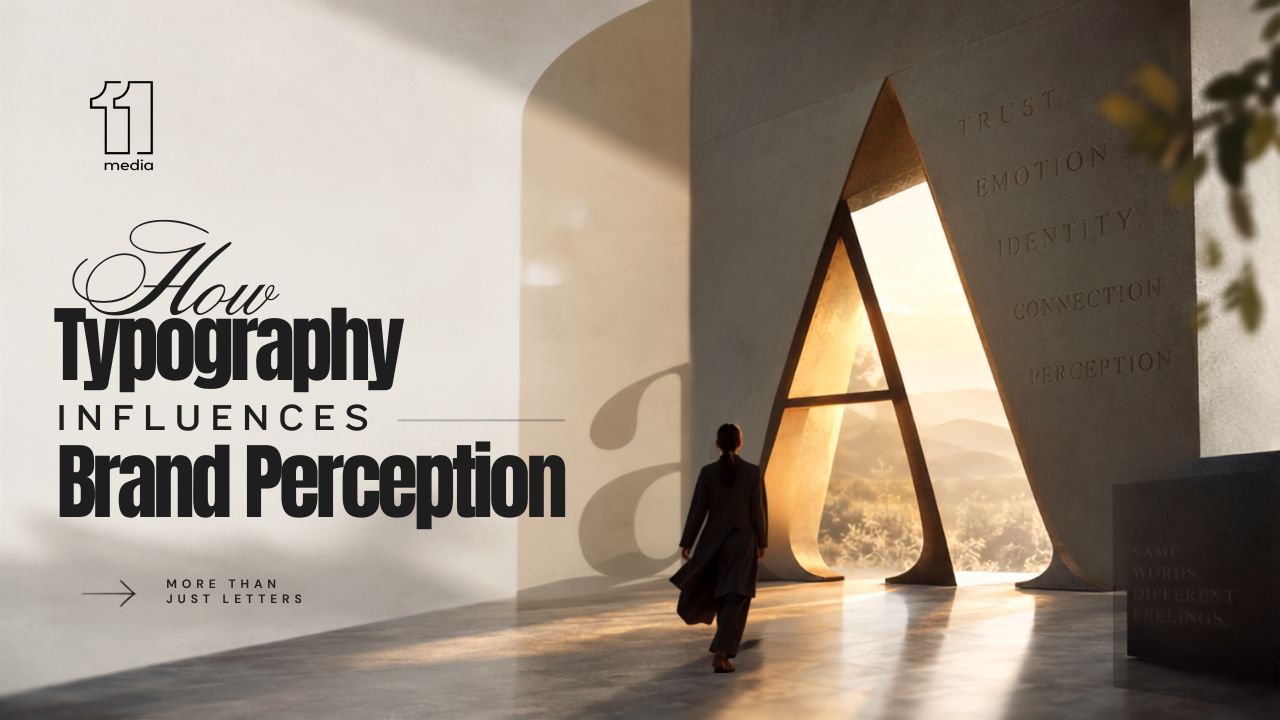
The fonts your brand uses communicate personality before anyone reads a single word. Serif fonts feel established and trustworthy. Sans-serif fonts feel modern and clean. Script fonts feel personal and creative.
Brand typography includes:
– Heading typeface
– Body typeface
– Accent or supporting typeface
– Rules for how they are used together
5. Visual Language
Visual language is the broader aesthetic system that makes your brand recognisable even without a logo. It includes:
– Photography style — the type of images your brand uses
– Illustration style — if relevant to your category
– Graphic elements — patterns, textures, shapes, and icons
– Layout principles — how your brand arranges information visually
This is what makes brands like Amul, Tanishq, or Paper Boat instantly recognisable across all their communications — even when you cover the logo.
6. Brand Voice and Messaging
Brand identity is not only visual. How your brand communicates in words is equally important.
Brand voice defines:
– Tone — formal, conversational, bold, warm, authoritative
– Personality — the human characteristics your brand expresses
– Key messages — the core things your brand communicates consistently
– Tagline — a short, memorable phrase that captures your brand’s essence
A business that sounds different on its website, its Instagram, its packaging, and its customer service communications is a business with a weak brand identity — no matter how good the logo looks.
7. Brand Guidelines
Everything above is brought together in a brand guidelines document — sometimes called a brand book or brand bible.
This is the rulebook for your brand. It ensures that anyone who works with your brand — internal teams, designers, printers, agencies — applies it correctly and consistently every time.
Without brand guidelines, consistency is impossible at scale.
India’s business landscape is changing faster than ever. Consumers are more brand-aware, more discerning, and more connected than any previous generation. Here is why brand identity has never mattered more for Indian businesses:
Trust travels fast — and so does distrust. In a market where word of mouth and social proof drive buying decisions, a professional and consistent brand identity signals that a business is serious, established, and trustworthy — before a single conversation happens.
Competition is everywhere. Whether you are a manufacturer in Gujarat, a retailer in Maharashtra, or a service business in Karnataka — your competitors are no longer just local. Online discovery means any business with a stronger brand identity wins attention, even against larger competitors.
D2C is growing fast. India’s direct-to-consumer market is projected to reach $100 billion by 2025. In a category where the customer never walks into a store — brand identity is the entire experience.
AI and search are changing. When someone searches for a product or service on Google, or asks ChatGPT for a recommendation, businesses with a clear, consistent brand identity are more likely to be mentioned, cited, and recommended — because they have more coherent signals for AI systems to reference.
Step 1 — Define Your Strategy First
Before any design work begins, answer these questions:
Who is your ideal customer?
What problem do you solve for them?
How are you different from competitors?
What do you want people to feel when they experience your brand?
What are your brand values?
Step 2 — Develop Your Visual Identity
Work with a professional branding agency to develop your logo system, colour palette, typography, and visual language based on your strategy. Design decisions should have strategic reasons — not just aesthetic preferences.
Step 3 — Define Your Brand Voice
Write down how your brand communicates. Create examples of your tone in different contexts — a social media post, a customer email, a product description. Make sure the voice is consistent and distinctive.
Step 4 — Create Brand Guidelines
Document everything. Your logo rules, your colours, your fonts, your visual language, your voice. Make it accessible to everyone who works with your brand.
Step 5 — Apply Consistently
Roll out your brand identity across every touchpoint — website, social media, packaging, stationery, signage, presentations, and customer communications. Consistency over time is what builds recognition and trust.
Step 6 — Review and Evolve
Brand identity is not static. As your business grows, your identity should evolve with it — not through constant redesigns, but through thoughtful updates that reflect where your brand is going.
Using a logo without a system — Having a logo but no colour palette, typography, or guidelines means every piece of content looks different. Recognition never builds.
Prioritising trends over strategy — Designing a logo that looks trendy right now without thinking about whether it reflects your brand’s long-term positioning. Trends fade. Strategy doesn’t.
Inconsistency across platforms — Your website looks one way, your Instagram another, your packaging a third. Inconsistency breaks the trust that brand identity is designed to build.
Copying competitors — Designing a brand identity that looks similar to competitors because they seem successful. The entire purpose of brand identity is differentiation — blending in defeats the objective.
Underinvesting early — Treating brand identity as something to fix later, once the business is bigger. The businesses that build strong identities early grow faster, attract better customers, and build more durable reputations.
At 11 Media, every brand identity project starts with strategy — never design.
We spend time understanding your business, your market, your competitors, and your audience before a single visual is created. That research shapes every decision — the logo direction, the colour palette, the typography, the messaging, and the guidelines.
The result is a brand identity that is not just visually strong — it is strategically coherent. Every element has a reason. Every decision serves the positioning. And the whole system is built to work consistently across every touchpoint your customers encounter.
We have built brand identities for manufacturers in Morbi, service businesses across Rajkot and Ahmedabad, D2C product brands, and clients with international presence. Every project starts with the same question — who are you, who are you for, and what do you want people to feel?
If you are ready to build a brand identity that works — talk to our team at 11 Media.
Brand identity is the complete system of visual and verbal elements that a business uses to present itself consistently — including its logo, colours, typography, messaging, and tone of voice. It defines how a business looks, sounds, and is remembered by its audience.
Branding is the process of building and managing how a business is perceived. Brand identity is the set of tangible elements — logo, colours, fonts, messaging — created through that process. Branding is the action. Brand identity is the output.
Brand identity design in India ranges from ₹25,000 for a basic logo and identity package to ₹2,00,000+ for a complete strategic brand identity system. The investment depends on the scope — strategy, logo system, visual language, guidelines, and digital rollout. At 11 Media we offer packages suited to different business stages. Contact us for a custom quote.